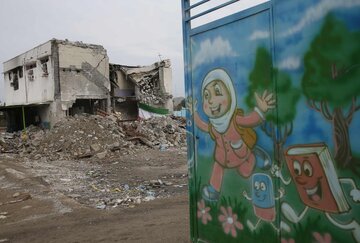
AhlulBayt News Agency (ABNA): From Afghanistan and Iraq to Yemen and now southern Iran, ceremonies that were meant to symbolize joy and the beginning of a new life have, in the shadow of US military strikes or operations by Washington-backed coalitions, become scenes of mourning for families.
The most recent case is the attack on a house in the Kuhistak area of Sirik in Hormozgan, which was targeted during a wedding ceremony. According to a report by the Iranian Red Crescent, at least 4 people were killed and 67 wounded, with most of the victims reported to be women and children.
This incident has once again brought to the forefront questions about the protection of civilians in war and America's claims of respecting human rights, an issue that gains broader dimensions when reviewing similar incidents over the past two decades. Of course, the responsibility and details of each incident must be examined separately based on evidence and credible reports.
Weddings That Turned into Funerals
One of the most well-known cases occurred on July 6, 2008, in Nangarhar province, Afghanistan, when a group accompanying a bride to the wedding venue was targeted by a US airstrike. An Afghan government investigation confirmed the deaths of 47 civilians, including the bride, and the wounding of 9 others, with women and children among the victims. The US Army initially denied civilian deaths, claiming the target had been armed forces.
On May 19, 2004, a US attack on the village of Makr al-Dib in Anbar province, Iraq, became one of the most controversial cases related to attacks on wedding ceremonies. Local reports indicated 42 deaths, including women and children, while US military officials claimed the presence of armed forces and that the location had become a military target. The release of video footage from the wedding also fueled the dispute over the official US narrative.
In Yemen, an attack on a wedding ceremony in 2015 also drew widespread attention. Yemeni officials put the death toll from the Saudi-led coalition airstrike at up to 131, and reports described it as one of the deadliest attacks on a wedding ceremony in the country. This case differs from direct US attacks in terms of responsibility and falls within the framework of Saudi coalition operations; therefore, it is more accurate to use the phrase "US-backed coalition" rather than directly attributing it to a US attack.
It was not the first time a wedding ceremony in Yemen had been targeted in a US-related operation. In December 2013, a US drone strike on a wedding convoy in Yemen killed and wounded at least a number of civilians, and Human Rights Watch called for an investigation into the legal basis of the attack, stating that the US government had not provided sufficient information about the legal basis for the strike.
2026; The Repetition of a Bitter Image in Iran
Now this image has once again appeared in Kuhistak, Sirik County, Hormozgan.
According to published reports, in the US missile attack on September 1, 2026, a residential house where a wedding was taking place was targeted. Various sources disagree on the exact number of casualties; foreign media, including the Associated Press, reported four dead and over 60 wounded based on Iranian sources, and Reuters also confirmed the death of four people in the wedding, including a 4-year-old child.
Iranian officials have condemned the attack, while the US Army has stated that its targets were military infrastructure and has not confirmed the intentional targeting of civilians.
Putting these cases together raises a serious question for public opinion: how is it that in wars started with claims of fighting terrorism, ensuring security, or targeting military objectives, a completely civilian event like a wedding has repeatedly become a scene of human casualties?
Answering this question requires an independent investigation of each case, transparency about the claimed military targets, an inquiry into the rules of humanitarian law, and accountability for those responsible. But for families whose loved ones' wedding celebrations have turned into mourning, the final outcome is the same: war has crossed the line between the battlefield and the homes and joyful celebrations of ordinary people.
**************
End/ 345E